
Main course profitability
Protect profit on your main courses.
Main courses often account for a significant proportion of food costs and menu revenue. Understand ingredient costs, portion sizes and selling prices to improve profitability without compromising quality.
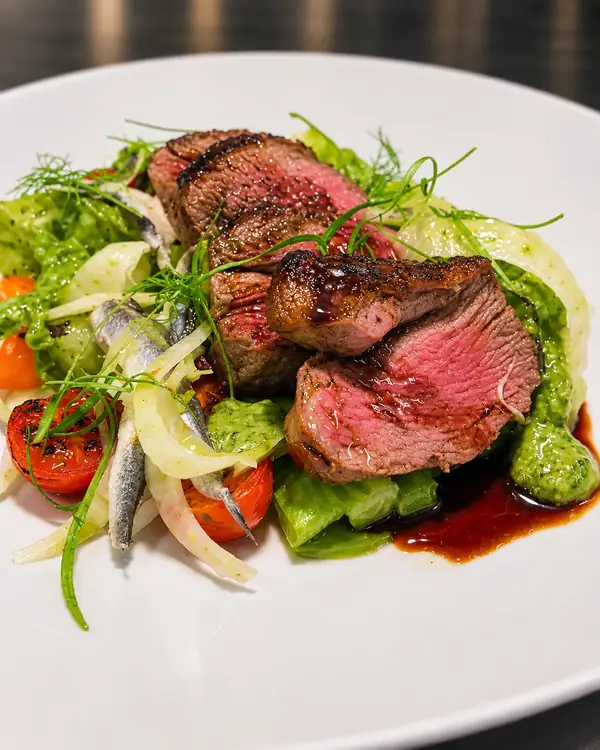
-
Food cost control
Understand the true cost of each main course.
-
Portion consistency
Maintain quality while controlling ingredient usage.
-
Menu engineering
Identify your strongest performing and most profitable dishes.
The short answer
A main course makes money when its plate cost is known at usable weight, its price is set for the room, and its cash margin is judged against how often it sells. It loses money when the protein is costed at purchase weight and the dish everyone talks about is quietly the weakest on cash.
Where main course menus lose margin
The usual leak is protein. It is the biggest line on the plate, it is often costed at purchase weight rather than usable weight, and it moves in price faster than the menu does.
The second is the signature dish. The dish that gets talked about and photographed is frequently the one on the thinnest cash margin, and it sells well because it is being recommended. Volume on a low margin dish is the most expensive kind of success.
What I analyse
- Plate cost at usable weight. Protein, sides and sauce, costed from current invoices after trim and cooking loss.
- Cash margin against mix. What each main returns in pounds, plotted against how often it sells, to classify it as a star, plough horse, puzzle or dog.
- Build time and skill. Whether the section can hold the dish through a full service, and what it costs in labour.
- Portion and price logic. Whether the price steps between mains make sense to the customer and to the margin.
Gross profit and food cost for mains
A main at a lower food cost percentage is not always better than one at a higher percentage. A dish returning more pounds per plate beats one returning fewer, even if its percentage looks worse. That is why the scoring uses cash margin as well as percentage, both calculated on the net price.
Pub classics and signature plates need the same treatment as anything else. A familiar dish can be the most reliable earner on the menu or the quietest drain, and only the costing says which. To test one dish yourself, use the GP calculator, which works on the net price.
A worked example
Two illustrative mains, with the VAT taken off first.
| Menu price | Net of VAT | Plate cost | Food cost | Cash margin | |
|---|---|---|---|---|---|
| Main A | £16.00 | £13.33 | £3.10 | 23.2% | £10.23 |
| Main B | £28.00 | £23.33 | £8.40 | 36.0% | £14.93 |
Main B has the worse percentage and returns about £4.70 more cash per plate. Which of the two is the better dish depends on how often each sells, which is why mix is scored beside margin. Net price is the menu price divided by 1.2. The GP calculator does the same sum for your own dish.
Illustrative figures, not a client result and not a forecast.
Opportunities worth testing
- Rebuild a signature dish that loses money, keeping what the room loves and changing the specification behind it.
- Reposition a high margin main that nobody orders before deciding to remove it, as the problem is often position or description.
- Reprice selectively, with two or three considered changes rather than an across the board rise.
- Review sides and sauces, where small costs sit unnoticed on every plate.
Questions to ask of your menu
- Is the protein costed at usable weight, after trim and cooking loss?
- Which main is the signature dish, and what does it return in pounds?
- Is there a high margin main that nobody orders, and if so is the problem its position or its description?
- Which sides and sauces add cost to every plate unnoticed?
- Could the price steps between mains be made to make sense to the guest?
Not a forecast
These are the places I look first, drawn from how menus behave in general. What they are worth on your menu depends on your costs, your prices and your sales mix, which is why the analysis starts with your own numbers.
Dishes
Plates from the same kitchens as the rest of this site, shown because each one has a commercial point to make.
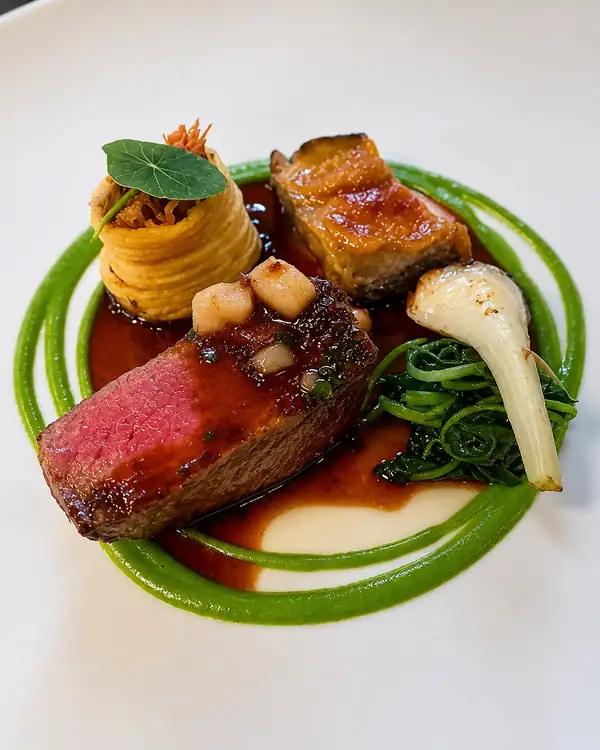
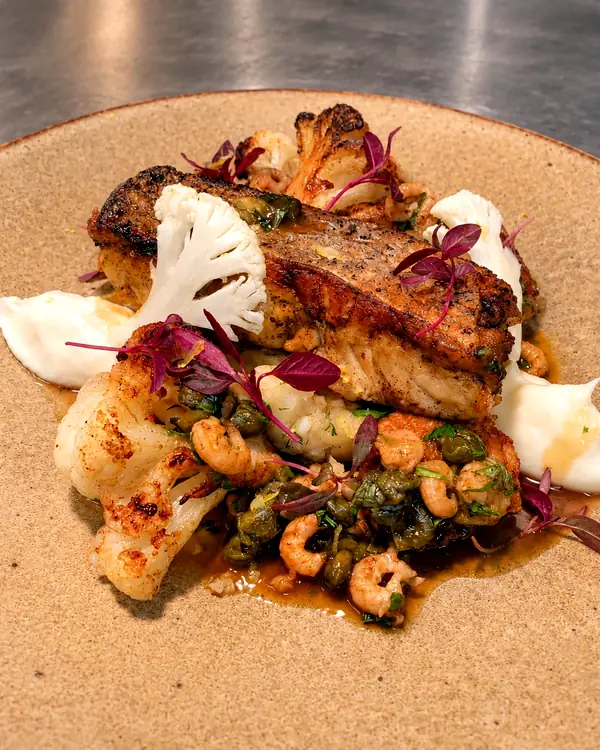
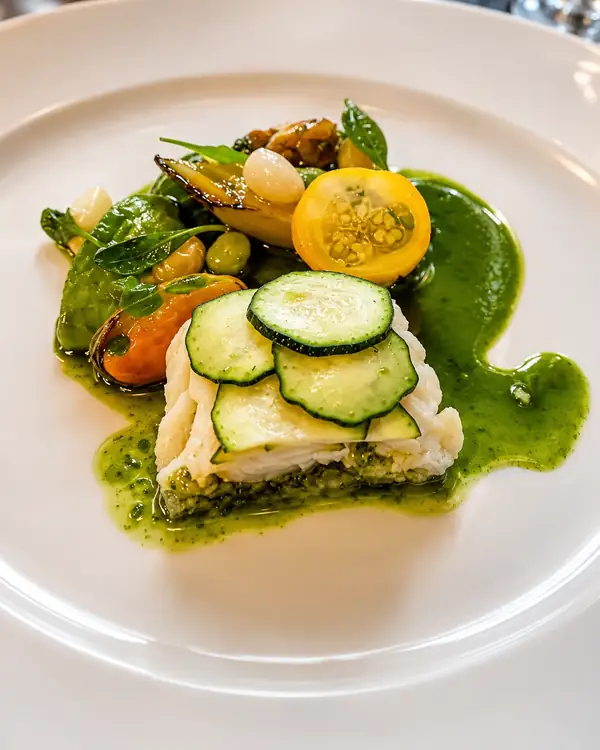
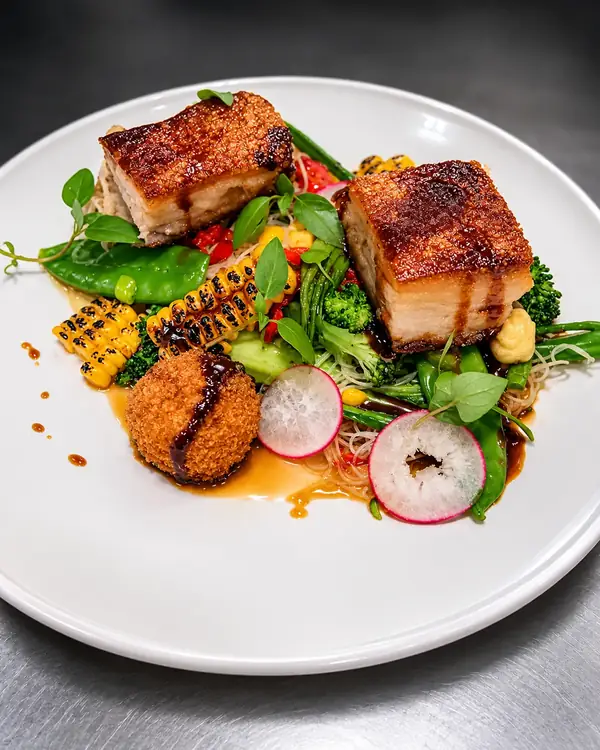
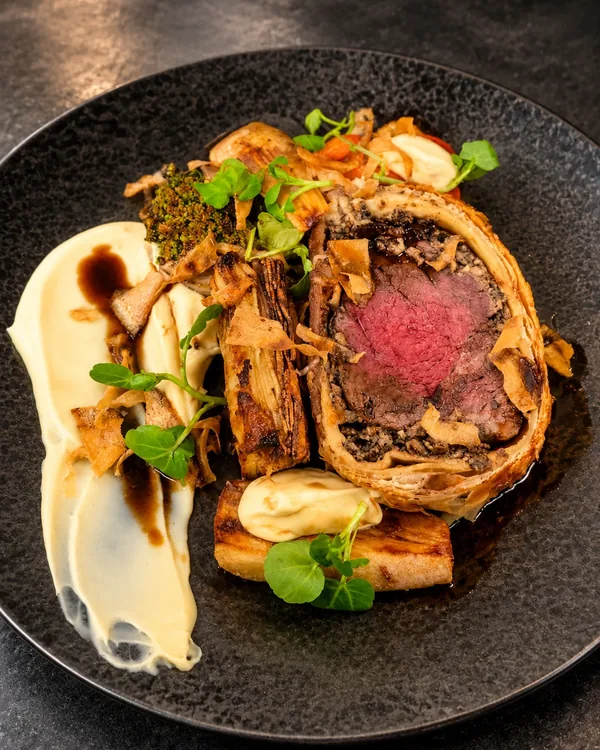
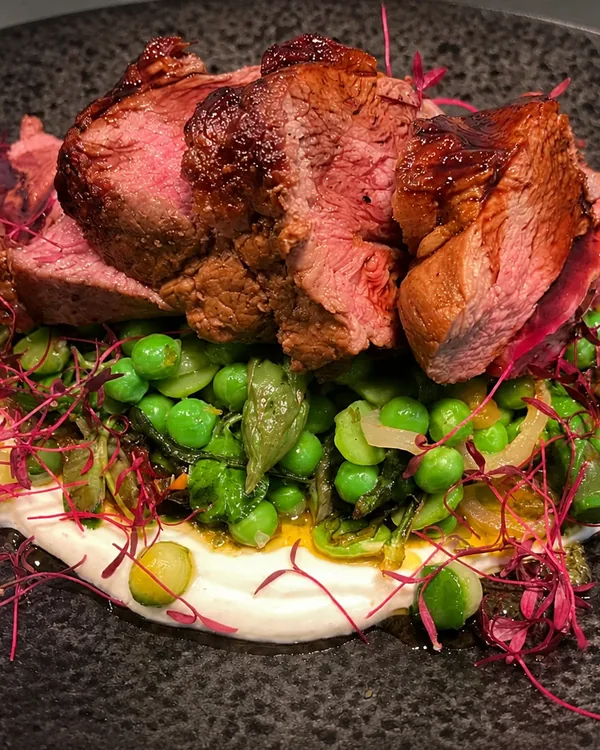
Mains menu profitability FAQs
What is a good gross profit on a main course?
It depends on the site, the price and what the room will pay, so I do not quote a single number. The target comes from your own trading and costs, and the work is making each main hit it on cash as well as percentage.
Should I take off a popular dish that loses money?
Rarely. Usually it should be rebuilt: a changed specification, a better portion or a considered price move. Removing a dish people come for can cost more than the margin it loses.
Does this apply to pub classics?
Yes. Familiar dishes are often the highest volume on the menu, so a small cost or price change is worth more there than anywhere else.
Which main should I look at first?
The one that sells most. A small change to a dish that sells in volume is worth more than a large change to one that does not.
How do I handle a premium protein?
Cost it at usable weight, carry it with lower cost components, and keep the portion modest enough that the dish still returns good cash at the price the room will pay.
Should every main hit the same gross profit?
Not necessarily. The menu has to hit its target overall. Some dishes carry more margin so that others can anchor the price, and the mix decides whether the total works.
How this page is sourced
The arithmetic is standard and can be checked against the GP calculator. The worked figures are illustrative and are not client data or a forecast, and no external statistic is quoted. The photographs are plates from kitchens Ryan has worked in; the dish names describe what is on the plate.
No outcome is promised on this page. What a change is worth depends on your menu and your room, and establishing that is what a menu audit does. For the specifications behind the plates shown here, see the results page. For restaurants and pubs, restaurants and pubs and gastropubs.
Related
pricing a menu properly, the full menu engineering guide, the results and the plates behind them.
Menu profitability by section: breakfast, starters, lunch, desserts.
the menu audit and a sample analysis.
To cost it: the recipe costing calculator, which has a yield field for trim and cooking loss. To earn more from each guest: raising spend per cover. To act on it: menu redesign, or new product development when a dish needs rebuilding.
Send me your menu
Tell me which dish you think is your weakest. Twenty minutes, and we find out whether you are right.