
Lunch menu profitability
Make your lunch menu work harder.
Lunch margins are easily squeezed by lower prices, inconsistent portions and slow service. The right menu structure can protect gross profit without compromising the customer experience.
-
Dish costing
Margin at the actual lunch price.
-
Service speed
Preparation time and kitchen efficiency.
-
Menu performance
Which dishes deliver the best return.
The short answer
A lunch menu makes money when it is built for its own price and speed, shares prep with dinner, and is costed as a whole offer. It loses margin when it is a smaller portion of a dinner dish at a lower price, because both the cash and the percentage can fall together.
Where lunch menus lose margin
Many lunch menus are dinner dishes in smaller portions, or a set of lighter dishes added over time. Neither was costed as its own offer. The price the room will pay at lunch is lower, so a dish that works in the evening can quietly lose money at midday.
Speed matters as well. A lunch dish that takes too long to build either holds up the section or costs a customer who has an hour. Both are costs that never appear on a recipe card.
What I analyse
- Cash margin at the lunch price. Each dish costed against what the room will actually pay at that time of day.
- Shared prep with dinner. Which lunch dishes use components already prepped for the evening, and which need their own.
- Build time per plate. Whether the lunch menu can be served inside the time customers are willing to wait.
- Set and deal pricing. The blended margin of any fixed price offer, not the margin of each dish on its own.
Gross profit and food cost at lunch
A set lunch or a two course offer has a blended gross profit, made up of the dish the customer picks and the dish they would otherwise have chosen at the full price. The right test is the margin on the whole offer against what it displaces, not the margin on the cheapest item.
Gross profit is worked on the net price and the real plate cost. The plates, sandwiches and salads that look cheapest to make are often the most variable in portion, which is where lunch food cost drifts. To test one dish yourself, use the GP calculator, which works on the net price.
A worked example
The same illustrative dish at a dinner portion and a smaller lunch portion, with the VAT taken off first.
| Menu price | Net of VAT | Plate cost | Food cost | Cash margin | |
|---|---|---|---|---|---|
| Dinner portion | £16.00 | £13.33 | £4.40 | 33.0% | £8.93 |
| Lunch portion | £11.00 | £9.17 | £3.60 | 39.3% | £5.57 |
The lunch portion costs less and returns about £3.40 less cash per plate at a worse percentage. A smaller portion at a lower price is not the same dish at a smaller size, and it needs its own costing. Net price is the menu price divided by 1.2. The GP calculator does the same sum for your own dish.
Illustrative figures, not a client result and not a forecast.
Opportunities worth testing
- Build the lunch menu from the dinner prep list, so the same components serve both services.
- Cut the menu to the dishes the section can send at pace, and price them for the lunch customer rather than discounting the dinner price.
- Cost any set menu as a whole offer, with a realistic mix of what customers pick.
- Fix portion and garnish on the lighter dishes, where small variations show most.
Questions to ask of your menu
- Is every lunch dish costed at its own price and portion, not borrowed from the dinner costing?
- Which lunch dishes use components already prepped for dinner?
- How long does each lunch dish take to build, and does the room have that long?
- If there is a set menu, has it been costed as a whole with a realistic mix?
- Which lunch dish returns the most cash for the least section time?
Not a forecast
These are the places I look first, drawn from how menus behave in general. What they are worth on your menu depends on your costs, your prices and your sales mix, which is why the analysis starts with your own numbers.
Dishes
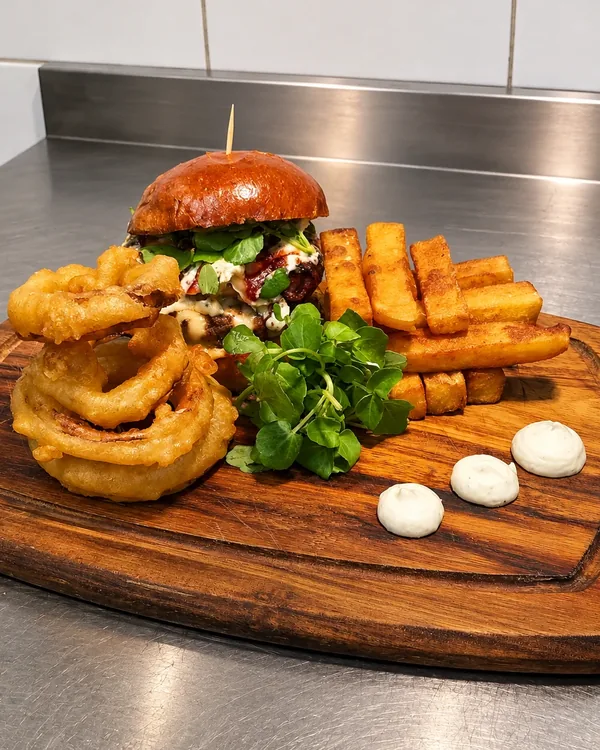
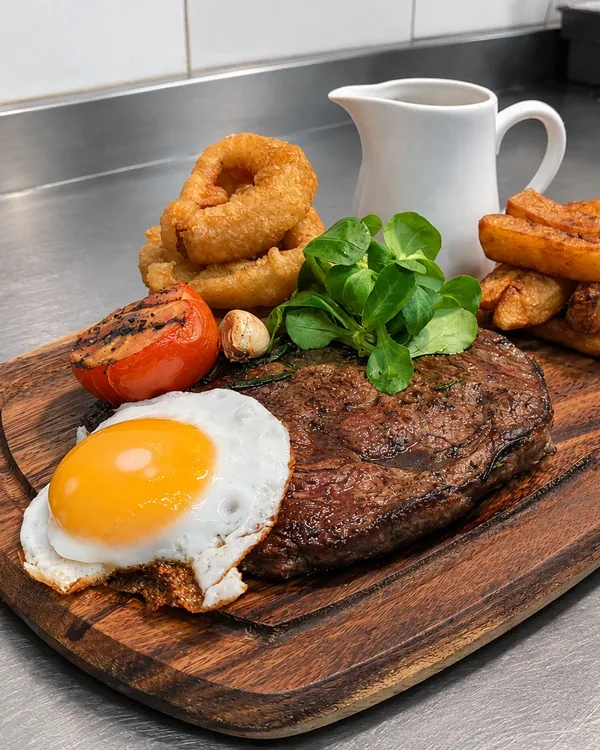
Plates from the same kitchens as the rest of this site, shown because each one has a commercial point to make.
Lunch menu profitability FAQs
Should the lunch menu be a smaller version of dinner?
Sometimes, but only if it is costed that way. A smaller portion of a dinner dish at a lower price can leave less margin than either on its own. A lunch menu built for its own price and speed usually performs better.
Are set lunch menus worth it?
They can be, if the offer is costed as a whole. The question is what the customer would have spent otherwise and what the blended margin is, not whether each dish looks cheap.
How do I keep lunch food cost under control?
Fix portions and garnish, share prep with dinner so less is wasted, and cost against current invoices. Lunch food cost drifts most where portions are left to the cook.
Is a lunch menu worth running at all?
It depends on the cash it returns against the section time it uses. Some lunch services are the most efficient part of the day and some only fill the room. Costing each dish at the lunch price is how you tell which yours is.
How many dishes should a lunch menu have?
As few as the room needs. Every extra dish adds prep and waste, and a short menu the section can send at pace almost always earns more than a long one.
Can lunch use the same prep as dinner?
It should. Shared components cut waste and shorten the section, and they are the simplest way to protect lunch margin without changing what guests see.
How this page is sourced
The arithmetic is standard and can be checked against the GP calculator. The worked figures are illustrative and are not client data or a forecast, and no external statistic is quoted. The photographs are plates from kitchens Ryan has worked in; the dish names describe what is on the plate.
No outcome is promised on this page. What a change is worth depends on your menu and your room, and establishing that is what a menu audit does. For the kitchens behind this, see menu engineering for pubs and the results page.
Related
what a menu costs in labour, pricing a menu properly, menu engineering for pubs.
Menu profitability by section: breakfast, starters, main courses, desserts.
the menu audit and a sample analysis.
To cost it: the food cost calculator and the recipe costing calculator. To act on it: menu redesign.
Send me your menu
Tell me which dish you think is your weakest. Twenty minutes, and we find out whether you are right.