
Breakfast menu profitability
Make your breakfast menu work harder.
Full English breakfasts, brunch dishes and morning menus need to balance ingredient costs, preparation time and customer expectations. Build a breakfast menu that delivers value while protecting margins.
-
Dish costing
Understand the true cost and margin of every breakfast dish.
-
Kitchen efficiency
Improve preparation time and consistency during busy morning service.
-
Menu performance
Identify which breakfast dishes deliver the strongest returns.
The short answer: breakfast profitability
Breakfast makes money when every plate is costed at usable weight, the extras are priced as extras, and the number of variants is small enough for a section to send them at pace. Breakfast loses money through small unexamined costs, repeated at volume, against a low selling price.
Where breakfast menus lose margin
A cooked breakfast is the most component heavy plate most kitchens serve. Eggs, bacon, sausage, bread, tomato, mushroom and a sauce or two each have their own yield, their own supplier price and their own way of being over-portioned at seven in the morning.
The selling price is also low, so the same cost error does far more damage in percentage terms than it would on a main course. And because the menu often grows one request at a time, there can be six versions of the same plate, each costed differently or not at all.
What I analyse
- Plate cost by component. Costed from current invoices at usable weight, not purchase weight, including the small items nobody counts.
- Cash margin per plate. A cheap plate at a good percentage can still return little in pounds, and the cash figure is what pays for the shift.
- Build time at peak. How many plates a section can send in the busiest half hour, and what slows it down.
- The price ladder. The gap between a small plate, the full plate and the extras, and whether the middle of that ladder is doing any work.
Gross profit and food cost at breakfast
Gross profit here is worked on the net selling price, after VAT, against the real plate cost. Breakfast tends to be where the gap between the theoretical and the actual food cost shows first, because the lines bought most often, such as eggs, bacon and bread, are also the ones whose prices and waste move most.
A breakfast that looks fine on percentage can still be the weakest daypart on cash. Looking at the pounds per plate and per hour of kitchen time is what shows whether the service is worth the labour it takes. To test one dish yourself, use the GP calculator, which works on the net price.
A worked example
An illustrative brunch plate and one add-on, with the VAT taken off first.
| Menu price | Net of VAT | Plate cost | Food cost | Cash margin | |
|---|---|---|---|---|---|
| Brunch plate | £11.50 | £9.58 | £2.80 | 29.2% | £6.78 |
| Add-on (extra egg) | £1.50 | £1.25 | £0.30 | 24.0% | £0.95 |
The add-on has the better percentage and returns far less cash, which is why add-ons are judged on what they add to the cheque and on build time, not on percentage alone. Net price is the menu price divided by 1.2. The GP calculator does the same sum for your own dish.
Illustrative figures, not a client result and not a forecast.
Opportunities worth testing
- Price add-ons separately, so the full plate is a base that customers build on rather than a bundle that gives everything away.
- Cut the number of variants of the same plate, so each remaining one is costed, prepared and priced on purpose.
- Fix the garnish and the portion on the pass, so cost does not vary from cook to cook.
- Make one brunch dish the plate the room is steered towards, chosen because it returns the most cash, not because it photographs well.
Questions to ask of your breakfast menu
- Is every plate costed from this quarter's invoices, including the bread, the sauces and the garnish?
- How many versions of the cooked breakfast are there, and does each have its own costing?
- Which extras are priced separately, and which are quietly included?
- How many plates can the section send in the busiest half hour?
- Is the brunch dish you push the one that returns the most cash?
Not a forecast
These are the places I look first, drawn from how menus behave in general. What they are worth on your menu depends on your costs, your prices and your sales mix, which is why the analysis starts with your own numbers.
Dishes
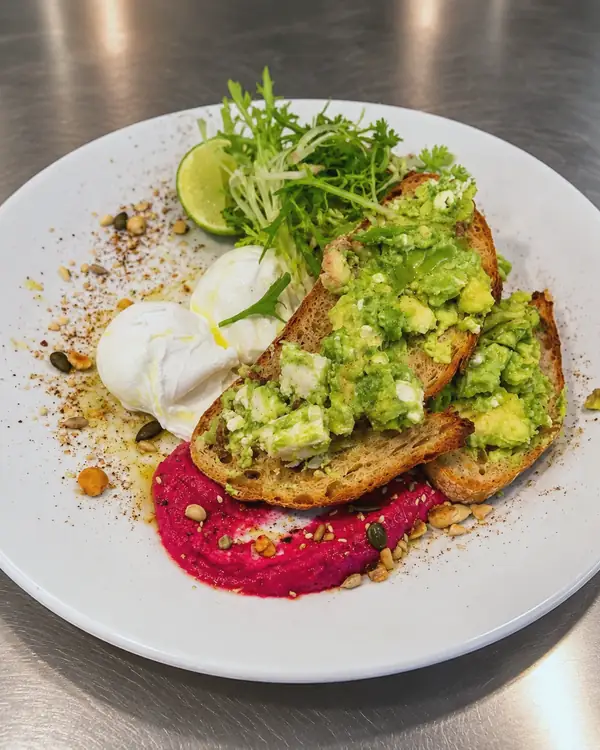
Plates from the same kitchens as the rest of this site, shown because each one has a commercial point to make.

Breakfast menu profitability FAQs
Is breakfast worth the labour?
It depends on cash margin per plate against the kitchen time it takes, not on food cost percentage. Some breakfast services pay for themselves and some only fill the room. Costing every plate and timing the section at peak is how you find out which yours is.
Should I take the full cooked breakfast off the menu?
Not before scoring it. It is often the dish customers come for, so removing it can lose the visit. The usual answer is to rebuild its specification and price its extras properly, rather than drop it.
Does this apply to hotel breakfast?
Yes, with one difference. Where breakfast is included in the room rate, the question becomes what each cover costs to serve and how much waste the format creates, rather than what it sells for.
How should I price breakfast add-ons?
Price them on what they add to the cheque, net of VAT, against their own plate cost and the build time they take. A small extra with a low cost and no extra pan is almost always worth listing separately.
What is the difference between breakfast and brunch for costing?
Brunch dishes are usually plated more generously and priced higher, so they can carry a better cash margin, but they often take longer to build. Cost them as their own offer and not as a larger breakfast.
Can I keep a breakfast menu profitable when ingredient prices keep moving?
Yes, if the costings are refreshed from current invoices on a regular schedule. Eggs, bacon and bread move most, so those lines are the ones to re-cost first.
Do allergens matter more at breakfast?
The rules are the same for every part of the menu. Breakfast dishes often contain several of the 14 allergens at once, so the information has to be right for every component. See allergens and Natasha's Law.
How this page is sourced
The arithmetic is standard and can be checked against the GP calculator. The worked figures are illustrative and are not client data or a forecast, and no external statistic is quoted. The photographs are plates from kitchens Ryan has worked in; the dish names are descriptions of what is on the plate.
No outcome is promised on this page. What a change is worth depends on your menu and your room, and establishing that is what a menu audit does. For a worked engagement that included an all day breakfast and lunch offer, see the results page. Hotel kitchens: menu engineering for hotels.
Related
Pricing a menu properly, how to calculate food cost, menu engineering for hotels.
Menu profitability by section: starters, lunch, main courses, desserts.
the menu audit and a sample analysis.
To cost it: the recipe costing calculator, for the yield on small items, and the food cost calculator. To grow the cheque: how to increase restaurant sales. To act on it: menu redesign.
Send me your menu
Tell me which dish you think is your weakest. Twenty minutes, and we find out whether you are right.