
Dessert menu profitability
Make more of your dessert menu.
Desserts can provide valuable opportunities to improve overall meal profitability. Understand which puddings sell, how portion costs affect margins and how to create a dessert menu customers want to order from.
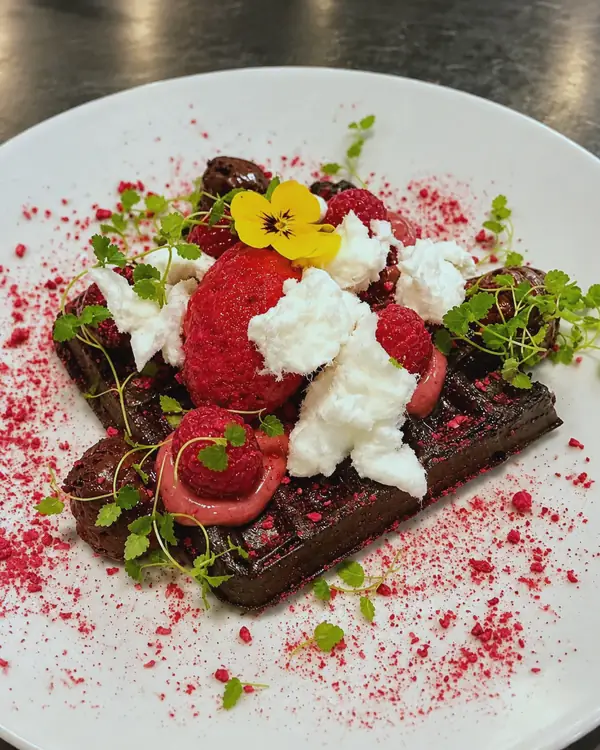
-
Dessert costing
Understand ingredient costs and margins per portion.
-
Menu appeal
Create a dessert selection that encourages additional orders.
-
Profit performance
Identify your strongest selling and most profitable puddings.
The short answer
A dessert makes money when most of it is made ahead, it can be finished in seconds mid service, and it looks worth the money. It loses margin when it is built to order from many fresh components, and when nobody counts how many tables order one.
Where dessert menus lose margin
Desserts are often written last and costed least. A section can end up with a dozen components, each prepped fresh in small amounts, and the waste from those quietly takes the margin the sweet course should be earning.
The other issue is attachment. Most menus never count how many tables order dessert, so a weak section looks fine while a large number of customers leave without one.
What I analyse
- Cash margin per dessert. What each pudding returns, against how often it is ordered.
- Batch against to order. Which components can be made ahead and which have to be finished on the pass, and the waste each creates.
- Build time mid service. Whether the section can plate a dessert while it is also sending mains.
- Attachment. What share of tables order dessert, and what the menu and the team do to encourage it.
Gross profit and food cost for desserts
Desserts can carry the highest gross profit on the menu, because the ingredient cost is low against the price the room will pay. That only holds if waste is controlled and the plate is built from components that last.
As elsewhere, gross profit is worked on the net price and the real cost. Perceived value matters: a dish has to look worth the price, which is a presentation decision as much as a costing one. To test one dish yourself, use the GP calculator, which works on the net price.
A worked example
An illustrative dessert and an illustrative shared dessert, with the VAT taken off first.
| Menu price | Net of VAT | Plate cost | Food cost | Cash margin | |
|---|---|---|---|---|---|
| Dessert | £8.50 | £7.08 | £1.70 | 24.0% | £5.38 |
| Shared dessert for two | £14.00 | £11.67 | £3.10 | 26.6% | £8.57 |
Both carry low food costs, and the shared dessert returns about £3.20 more cash per order. Whether it is worth listing depends on whether it lifts the number of tables that order dessert at all. Net price is the menu price divided by 1.2. The GP calculator does the same sum for your own dish.
Illustrative figures, not a client result and not a forecast.
Opportunities worth testing
- Build more of the dessert from batch produced components, so it can be finished in seconds mid service.
- Cut the section to the puddings that earn their place, and make sure one of them is a clear, high margin lead.
- Offer one shared dessert, priced on the cost per head.
- Describe each dessert so the room can see what makes it worth the money, and ask every table.
Questions to ask of your menu
- What share of tables order dessert, and has anyone counted?
- Which components are batch made, and which are finished to order?
- Can the section plate a dessert while it is also sending mains?
- Is one dessert clearly the lead, and is it the one that returns the most cash?
- Does the team recommend a dessert to every table?
Not a forecast
These are the places I look first, drawn from how menus behave in general. What they are worth on your menu depends on your costs, your prices and your sales mix, which is why the analysis starts with your own numbers.
Dishes
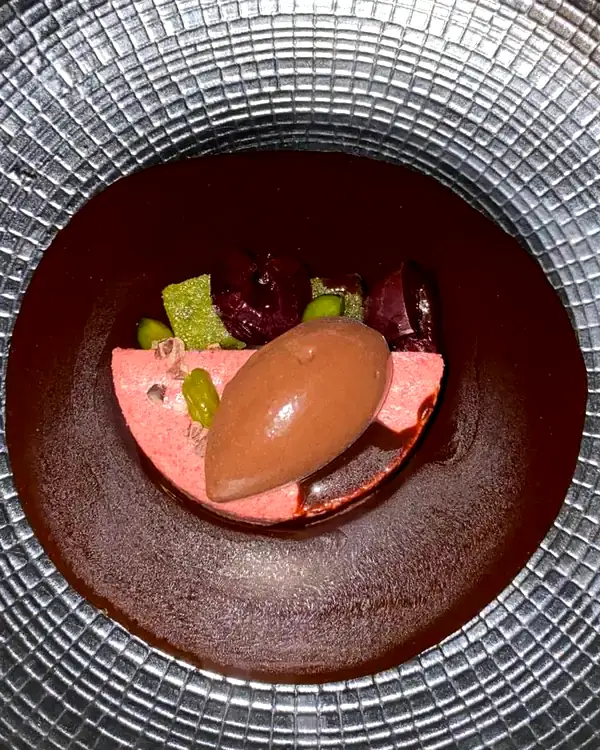
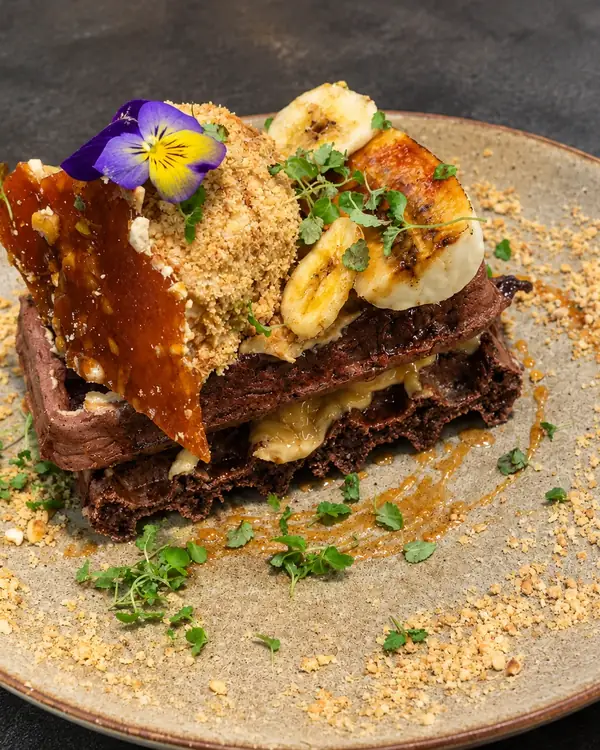
Plates from the same kitchens as the rest of this site, shown because each one has a commercial point to make.

Desserts menu profitability FAQs
Are desserts the most profitable part of the menu?
They often can be, because the ingredient cost is low against the price. That depends on waste, build time and how many tables order one, which is what the analysis measures.
How do I get more tables to order dessert?
Count how many do first. Then look at how desserts are described, when they are offered and whether the team recommends one. Small changes there often matter more than adding dishes.
Should desserts be made to order or in batches?
Mostly in batches, finished on the pass. A dessert that needs a lot of work mid service either slows the mains or does not get sold.
How many desserts should a menu carry?
Fewer than most do. A small section the kitchen can prep well, with one clear lead, usually earns more than a long one that wastes components.
Is a sharing dessert worth it?
It can be, if it raises the share of tables that order dessert. Price it on cash per head and watch whether single desserts fall as it rises.
How much does presentation matter?
A great deal, because perceived value is most of the margin in a dessert. The test is whether it looks worth the price without adding build time.
How this page is sourced
The arithmetic is standard and can be checked against the GP calculator. The worked figures are illustrative and are not client data or a forecast, and no external statistic is quoted. The photographs are plates from kitchens Ryan has worked in; the dish names describe what is on the plate.
No outcome is promised on this page. What a change is worth depends on your menu and your room, and establishing that is what a menu audit does. For the commercial thinking behind the brioche pudding shown here, see the results page. Hotel kitchens: menu engineering for hotels.
Related
how to write menu descriptions, pricing a menu properly, the results and the plates behind them.
Menu profitability by section: breakfast, starters, lunch, main courses.
the menu audit and a sample analysis.
To cost it: the recipe costing calculator. To lift the share of tables that order one: the spend per cover guide and how to increase restaurant sales. For new puddings: new product development. To act on it: menu redesign.
Send me your menu
Tell me which dish you think is your weakest. Twenty minutes, and we find out whether you are right.