A refined menu, and what it is worth.

Two operations rebuilt around the menu, with the figures those businesses recorded. Both are work carried out in post as head chef rather than as an external engagement, and that is stated on each one. One is named with the owner's permission; the other is not named, because that permission was not given.

Case studies

Case 01

A multi site pub group

Anonymised / Head chef appointment / Menu repositioning

From 300 to 650 Saturday covers through menu repositioning

An anonymised project. A site where a new head chef rebuilt the offer around a single cuisine the local market was not being served. Same room, same trading hours.

Food gross profit
+3 pts
~70% ~73%
Average spend per cover
+£5.00
£19.00 £24.00
Saturday covers
×2.2
300 650

Challenge

The site was trading a standard pub menu and sitting mid table in the group's internal rankings, with Saturday covers around 300. The menu was not drawing enough custom to justify the space the building already had.

What the analysis found

There was clear local demand for a cuisine no nearby operator was serving well, while the existing pub menu competed in a crowded category and returned average numbers. The opportunity was not more marketing behind the old menu. It was a different menu.

Approach

  • Repositioned the offer from standard pub fare to a focused menu in a single cuisine, built around dishes with demonstrated demand rather than chef preference.
  • Built the menu around high gross profit components, with starch and vegetables carrying the plate and protein portions controlled to spec, which is why margin and volume rose together rather than trading against each other.
  • Shortened the supply chain on the core lines, which improved both the product and the margin on them.
  • Ran a full cook off for the whole front of house team at every menu change, so staff had tasted every dish before they were asked to sell it.

Held constant

Same site and same trading hours, and no new capacity was built. As demand grew, areas of the building that had not previously been trading were brought into use, so the rise from 300 to 650 Saturday covers came from demand for the new menu filling space the site already had. Nothing was constructed and hours were not extended.

Case 02

Chesterfield / New opening / Menu development

Fully booked on a high end all day offer, in a market that treats daytime as filler

A new opening where Ryan built the menu from the ground up, from sold out ticket only vegan tasting menus to a high end a la carte and an all day breakfast and lunch offer.

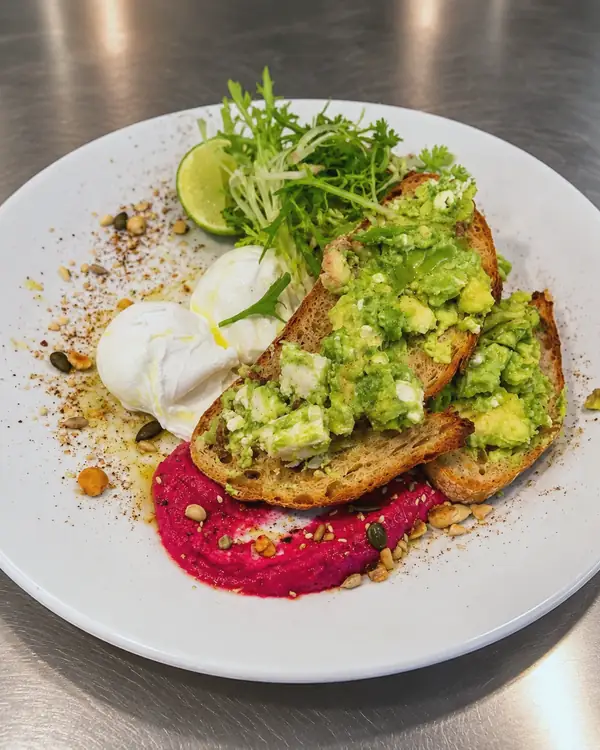
Smashed avocado on sourdough with poached eggs, beetroot hummus, dukkah and frisée, on a white plate.
The daytime signature: smashed avocado, beetroot hummus, dukkah
Saturday and Sunday covers, each day
+130 covers
20 to 30 160, full
Food gross profit
+4 pts
68% 72%
Average spend per cover
+£7.00
£15.00 £22.00

"Ryan helped generate massively popular dishes, and designed the evening a la carte and the vegan tasting menus, both of which were very popular. We went from quiet weekends to fully booked."

Ian Woodhead, Owner, The Lilypad

Challenge

The Lilypad opened as a high end day trade and weekend venue in a market where breakfast and lunch were rarely treated as a destination in their own right. Early weekends were quiet, 20 to 30 covers across Saturday and Sunday combined. The question was whether food this ambitious could fill a room at times of day most operators treat as filler.

What the analysis found

The opportunity came from looking outside the UK. In Australia, high end breakfast and lunch trade is well established and treated as a destination rather than an afterthought to dinner service. That was the gap: a daytime offer built to the same standard as an evening one, with dishes worth travelling for, rather than the usual daytime menu treated as an also ran.

Approach

  • Opened with ticket only vegan tasting menus, which sold out. This built early demand and a reputation for the food before scaling up the wider trade.
  • Designed a high end a la carte across the weekends, sitting alongside a separate all day breakfast and lunch menu built to the same standard.
  • Made the daytime menu a destination in its own right with made to order signature dishes: a hotcake built as a blueberry and ricotta sponge baked to order, and smashed avocado with beetroot hummus and dukkah.
  • Put a new photogenic dish on every week, which gave regulars a reason to keep coming back and gave the venue a steady stream of shareable content.

Held constant

Same site and the same weekend trading hours. The room filled through demand for the offer, not through discounting or extra covers capacity. The rise from 20 to 30 covers to a full 160 on both days came from the menu and the reputation it built.

How to read these.

Three numbers, agreed in writing before anything changes and measured again twelve weeks after launch.

  1. Baseline agreed before any work starts: food GP, average spend per cover, sales mix
  2. Changes implemented and dated, so the comparison period is unambiguous
  3. Same three numbers pulled at twelve weeks, like for like against the prior period

Both case studies are work carried out in post, as an employee, not as an external consultancy engagement. The first is anonymised at the operator's discretion and the figures are those the business recorded.

The owner comment below is given by the business owner and is held on file with written approval and contact details, as UK advertising rules require. The first operation is described without naming it, because no permission to publish it as a case study was given. Neither is a forecast for your site: what a menu can do depends on the market it sits in, and both of these sat in markets with room to move.

Where figures cannot be shown, and why twelve weeks

Not every client will let their gross profit be published, and that is a reasonable position for a business to take. Where figures cannot be shown, the case study will say so rather than substituting a vague claim. Where they can, they are shown as before and after against a baseline agreed at the start, not as a percentage improvement with no visible starting point.

Twelve weeks is long enough to clear the novelty effect of a new menu and short enough that the trading conditions are broadly comparable. Where a site is highly seasonal, the comparison is made against the same period in the prior year and that is stated on the case study. If you want to speak to a client directly before commissioning anything, ask. That is usually arrangeable.

Every plate here had to earn its place.

Not because it photographed well. Because it carried a margin, and a section could hold it through a Saturday. Grouped by the kind of kitchen the dish was built for, because what a specification has to survive changes completely between them.

These are not the case study dishes. Photographs are Ryan's own, taken across roles during service and development. No venue is identified and no dish here is presented as work carried out for a consultancy client, or as the food behind either set of figures above.

The same plates by part of the menu: starter menu optimisation, main course profitability and dessert menu profitability.

Gastropub and pub group kitchens

Volume sites where the specification has to survive a three person section on a Saturday. How the work differs in pubs.

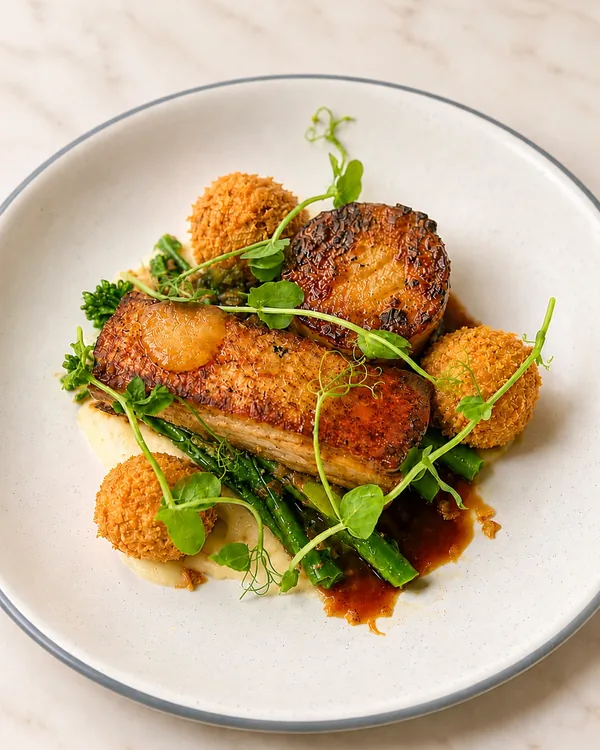
Pork belly with croquettes, a fondant potato and tenderstem on a white plate with a blue rim, plated.
Pork belly, croquette, fondant potato, tenderstem A classic build specified so a section of three can hold it through a Saturday.
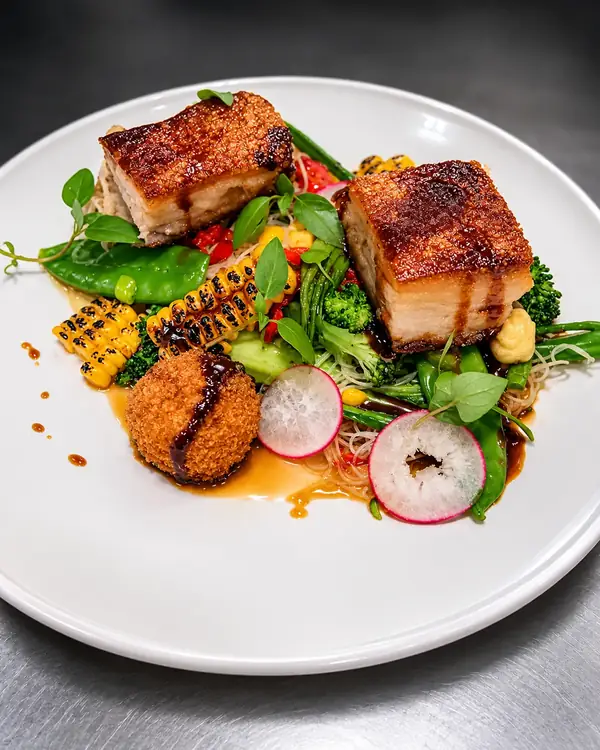
Two pieces of crackled pork belly with charred corn, a croquette, radish, snow peas, broccoli and rice noodles on a white plate.
Pork belly, charred corn, rice noodles, croquette Portioned from a whole belly at prep, so yield is controlled before service starts.
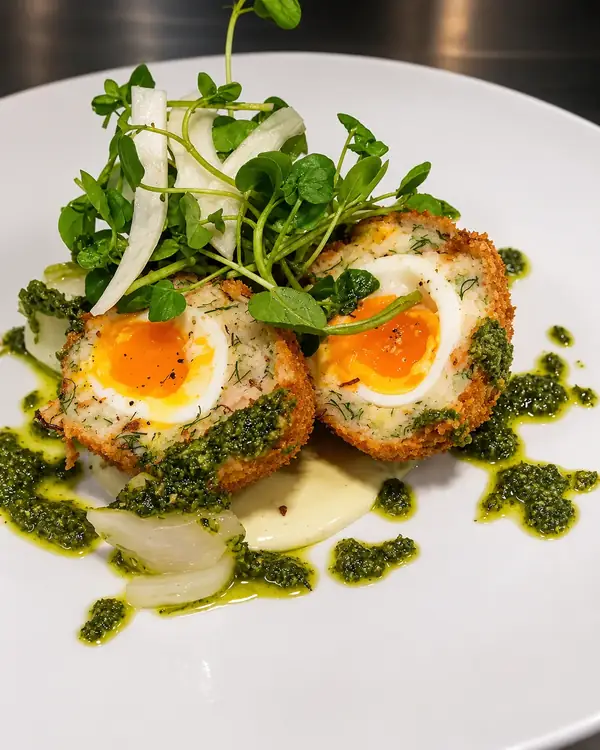
Salmon scotch egg, salsa verde, fennel, watercress, plated.
Salmon scotch egg, salsa verde, fennel, watercress Built from trim off the fillet, so one fish earns twice.
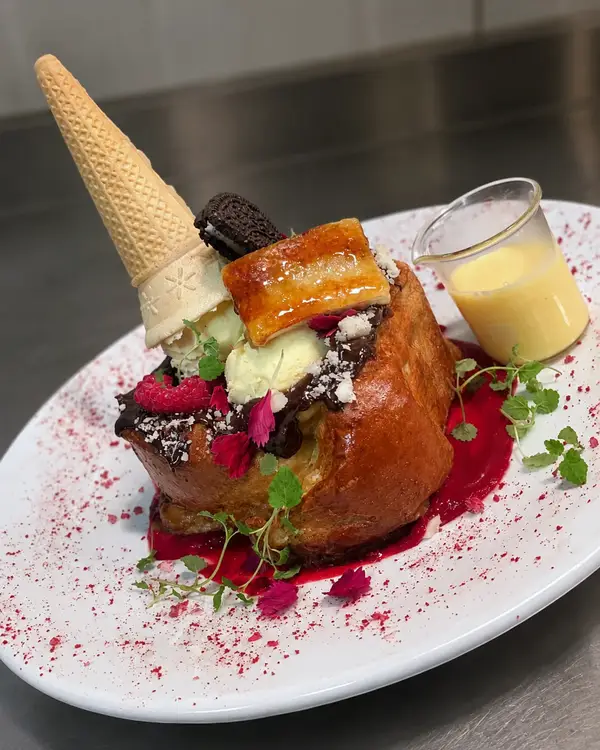
Brioche pudding with a waffle cone, vanilla ice cream, raspberries, a caramelised panel and a jug of custard on a white plate, plated.
Brioche pudding, vanilla ice cream, raspberry Low plate cost, high perceived value, batch baked. Desserts are where mix is won.
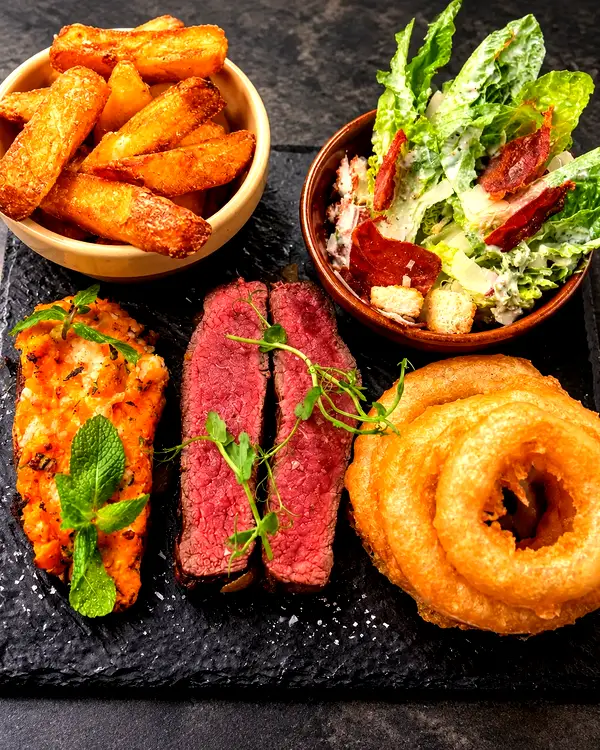
Sharing board on black slate: sliced rare steak, chunky chips, onion rings, a Caesar salad with crisp cured ham and an orange baked side topped with mint.
Steak sharing board, chips, onion rings, Caesar salad One board, five items on the order. The steak anchors it and the sides build the spend around it.
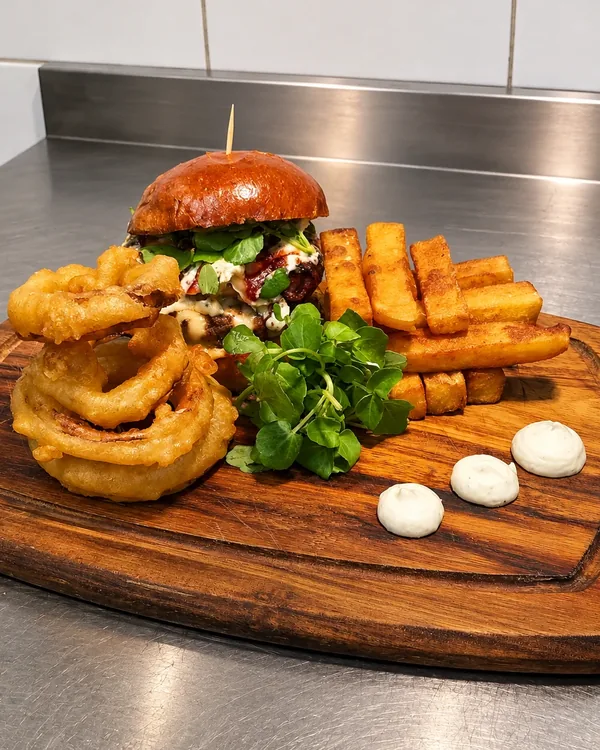
A burger in a glazed brioche bun with melted cheese and sauce, beer battered onion rings, chunky chips and three dots of mayonnaise on a wooden board.
Burger, brioche bun, onion rings, chunky chips A familiar build with a short ingredient list. The sides carry the plate and the spend.
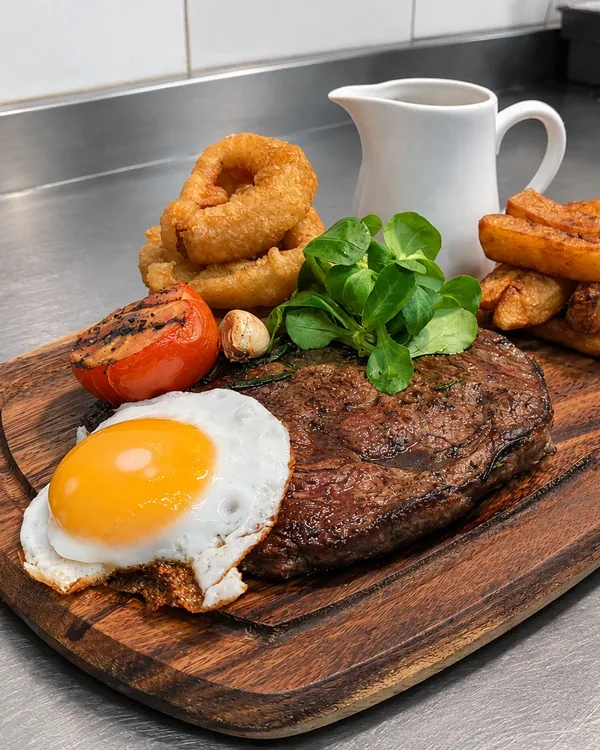
A ribeye steak with a fried egg, grilled tomato, onion rings, chunky chips, mache lettuce and a jug of sauce on a wooden board.
Ribeye, fried egg, onion rings, chunky chips A steak sold with its sides rather than alone, so the plate builds the spend.
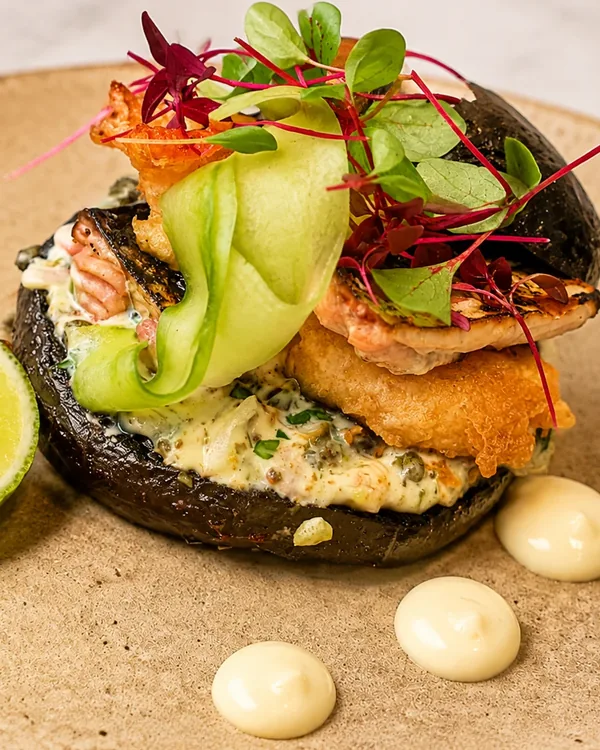
A stack of battered fish and grilled salmon on a dark base with caper tartare sauce, cucumber ribbon and micro herbs, with half a lime and dots of mayonnaise.
Battered fish and salmon stack, caper tartare, lime Height and a sharp sauce give a simple stack a premium look on the pass.
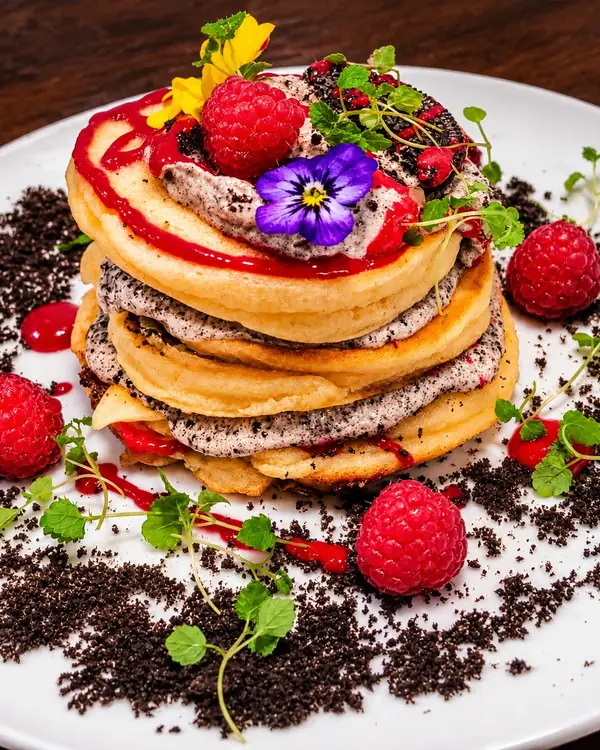
Stack of pancakes layered with a cookies and cream filling, raspberry coulis, fresh raspberries, a viola and biscuit crumb on a white plate.
Pancakes, cookies and cream, raspberry A bright, high margin plate where the garnish does the selling.

Restaurant kitchens

A la carte, where the build time and the plate cost are decided at development, not at service. How the work differs in restaurants.

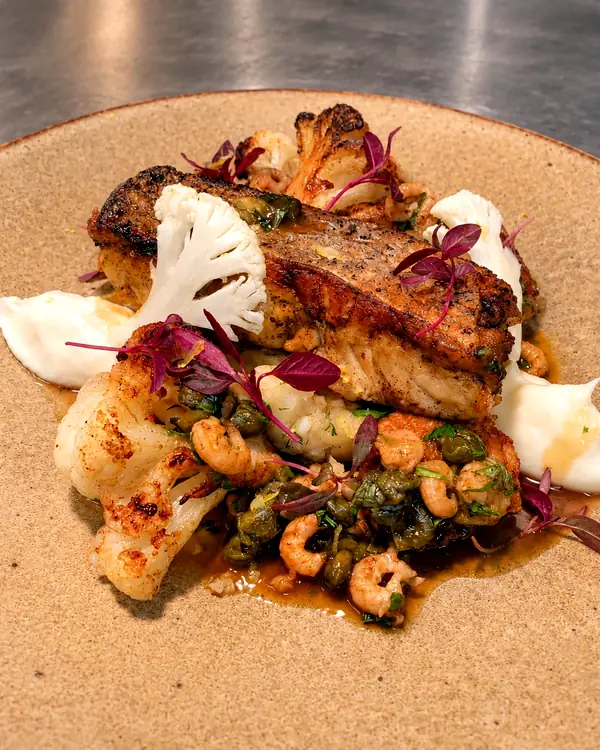
Pan-fried fish fillet on cauliflower purée with roast cauliflower, brown shrimp, capers and amaranth, on a sand coloured plate.
Pan-fried fish, cauliflower, brown shrimp, capers Cauliflower carries most of the plate, so the fish portion can stay modest and the dish still reads as a premium main.
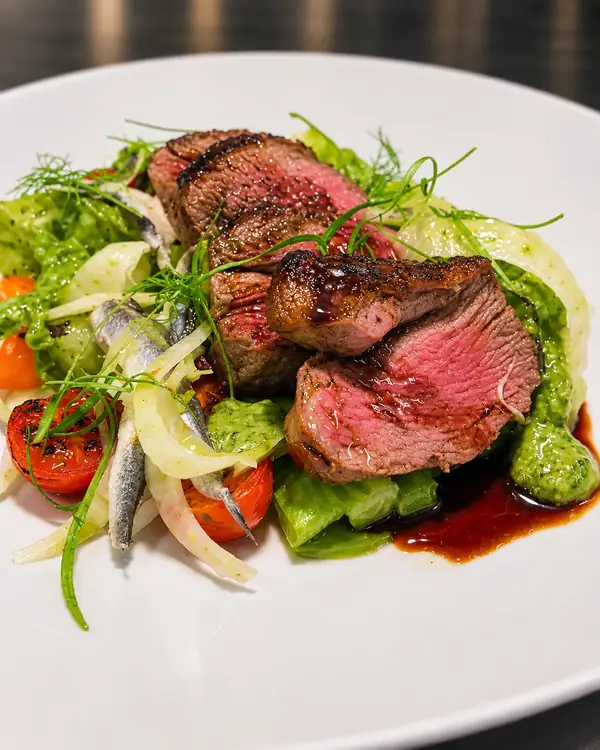
Lamb rump, fennel, anchovy, salsa verde, plated.
Lamb rump, fennel, anchovy, salsa verde Rump rather than rack. Similar eating quality, a fraction of the plate cost.
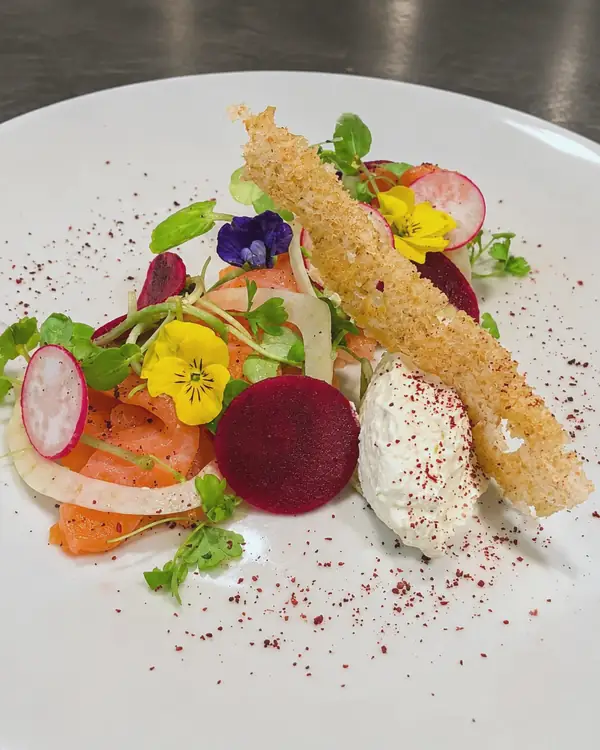
Cured salmon with beetroot, fennel, radish, edible flowers, whipped cream and a crisp, plated.
Cured salmon, beetroot, fennel, radish, crisp A cold starter, so it adds no load to a hot section at service.
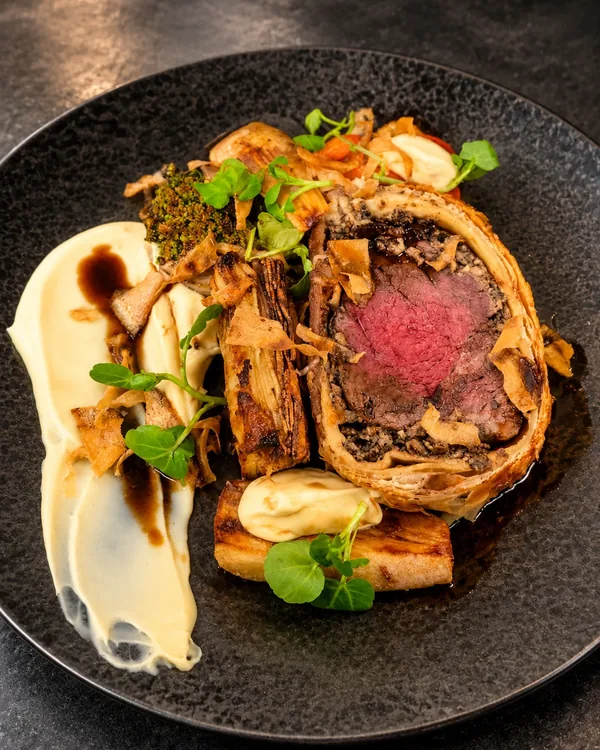
Beef Wellington cut to show pink beef and mushroom duxelles in pastry, with celeriac purée, roast parsnip, broccoli crumb, crisps and pea shoots on a black plate.
Beef Wellington, mushroom, parsnip, celeriac purée A showpiece main for the top of the menu, where the plate has to justify its price.
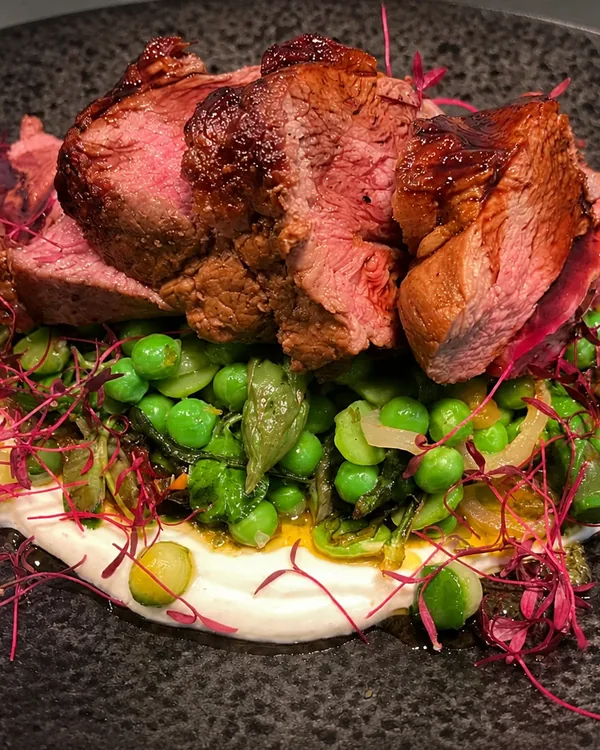
Sliced lamb rump with a glossy finish on peas, broad beans and a white purée, with amaranth cress, on a black speckled plate.
Lamb rump, peas, broad beans, white purée Rump gives the eating quality of lamb without the plate cost of the rack.
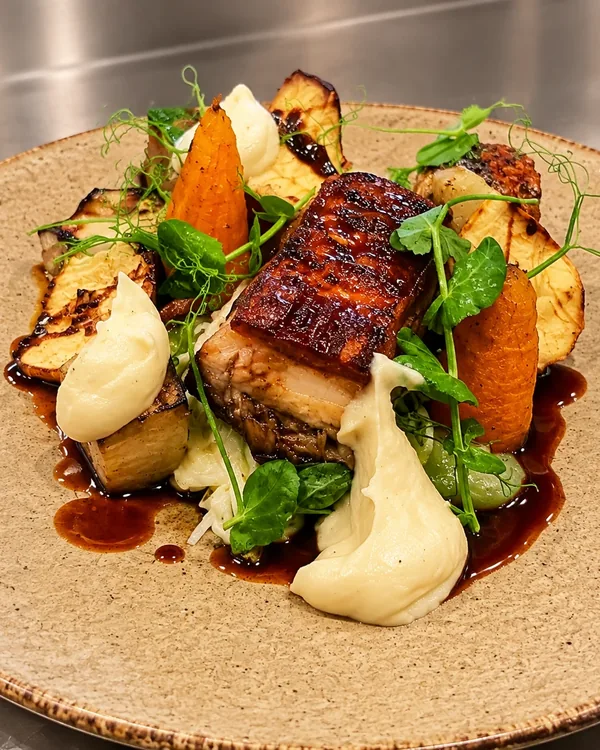
Pork belly with a scored glossy top, roast carrot, grilled celeriac, cauliflower purée, peas and pea shoots with a dark sauce on a stone coloured plate.
Pork belly, carrot, celeriac, cauliflower purée A lower cost cut that reads as a premium main when it is finished well.

Three AA Rosette kitchens

Fine dining, where the specification is the product and yield is controlled to the gram.

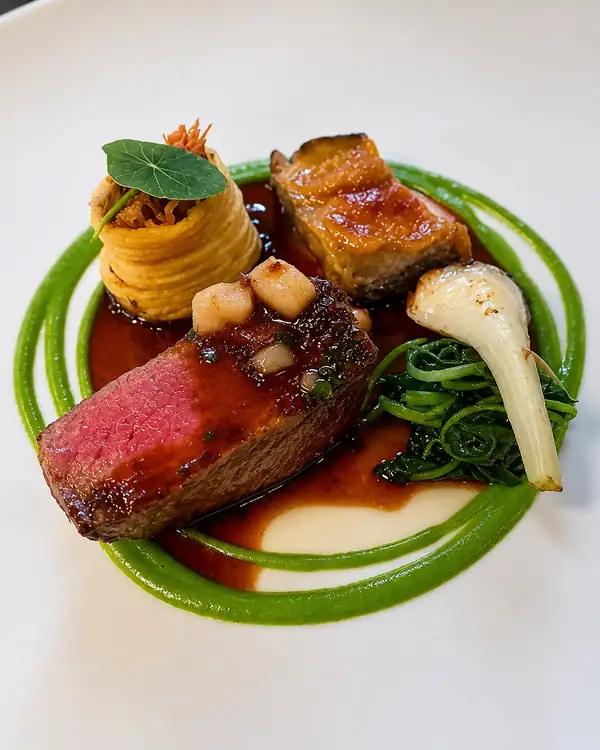
Beef fillet with a glossy sauce, a potato nest, a block of braised meat, grilled onion and greens on pea purée, plated.
Beef fillet, braised shin, artichoke, pea Two cuts of the same animal on one plate. That is how the fillet gets afforded.
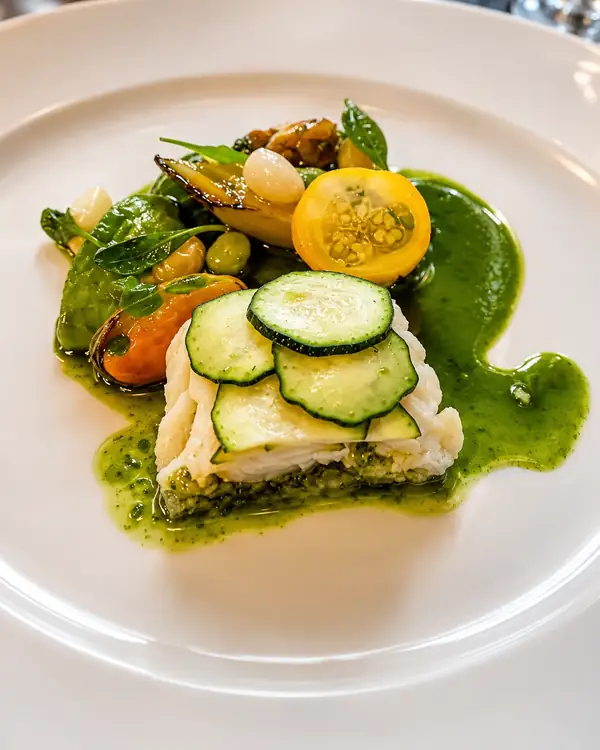
Brill topped with courgette ribbons, with mussels, broad beans, baby tomatoes and a herb sauce on a white plate.
Brill, courgette, mussels, herb velouté Whole fish filleted in house, which means costing on usable weight, not purchase weight.
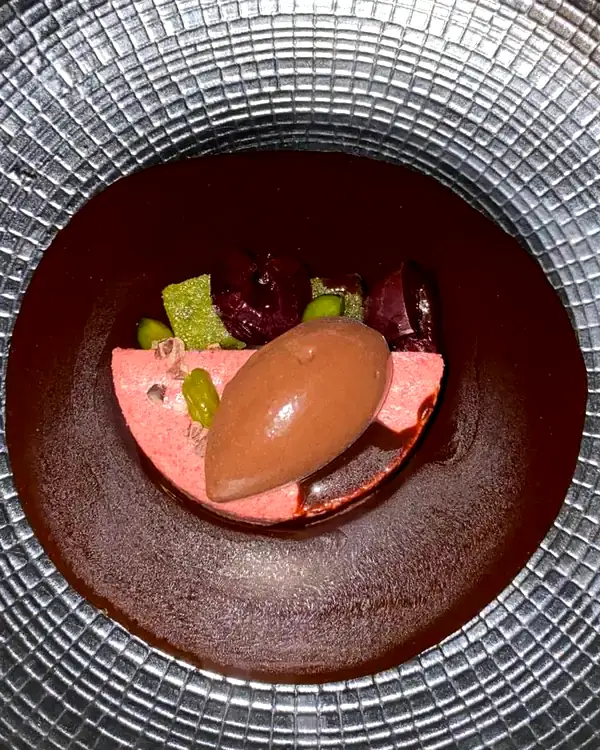
Chocolate, cherry, pistachio, plated.
Chocolate, cherry, pistachio Every element prepped ahead. At this level the specification is the product.

Set your own baseline.

Send your current menu and last quarter's food GP, and I will tell you where I would expect the movement to come from before you commit to anything. The profit per cover estimator runs the arithmetic on your own covers in the meantime.